
marketing@terra-charge.co.in

EV

How Shera’s Smart Motor Improves Every Ride

At the core of every Shera E-Rickshaw is a smart motor engineered to deliver smoother performance, higher efficiency, and superior ride comfort—day in and day out. Smooth & Responsive Power Delivery Shera’s smart motor ensures instant torque with controlled acceleration, enabling seamless start-stop movement in dense traffic and delivering a consistently comfortable ride. Higher Efficiency, Lower Energy Loss Optimized motor design minimizes power wastage, allowing more distance per charge while maintaining stable performance across varying load conditions. Quiet & Low-Vibration Operation Reduced noise and vibration significantly enhance driver and passenger comfort, creating a calmer, more refined travel experience. Built for Urban Durability Designed to withstand continuous commercial use, Shera’s smart motor delivers reliable performance with minimal wear—reducing maintenance requirements and downtime. The Sheraindia Advantage At Sheraindia EV Company, motor intelligence is a core differentiator. Our smart motor technology transforms everyday rides into efficient, comfortable, and dependable journeys. ConclusionA better motor doesn’t just move the vehicle—it elevates the entire ride experience. Shera’s smart motor is engineered to perform where it matters most.

EV

How Shera’s Battery System Delivers Longer Daily Range

In electric mobility, range defines earning potential. Shera’s battery system is engineered to deliver consistent, longer daily range, ensuring maximum uptime and revenue for drivers and fleet operators. Optimized Battery Architecture Shera’s advanced battery configuration is designed for high energy efficiency, enabling vehicles to cover more kilometers per charge without compromising performance or reliability. Intelligent Energy Management Smart power distribution and efficient motor integration minimize energy loss, ensuring optimal utilization of every charge across real-world driving conditions. Reliable Performance in Indian Conditions Shera’s battery systems are built to perform reliably in varied temperatures, traffic conditions, and load scenarios—delivering dependable range throughout the day. Faster, Convenient Charging Optimized charging compatibility reduces downtime and enables drivers to quickly return to operations, improving daily productivity. The Sheraindia Advantage At Sheraindia EV Company, battery performance is a strategic priority. Our systems are designed to extend daily range, reduce charging interruptions, and support uninterrupted commercial operations. ConclusionA longer daily range is not just a technical metric—it is a direct driver of income. Shera’s battery system is engineered to deliver measurable value, every single day.

EV

Top Reasons Shera E-Rickshaws Offer Superior Comfort

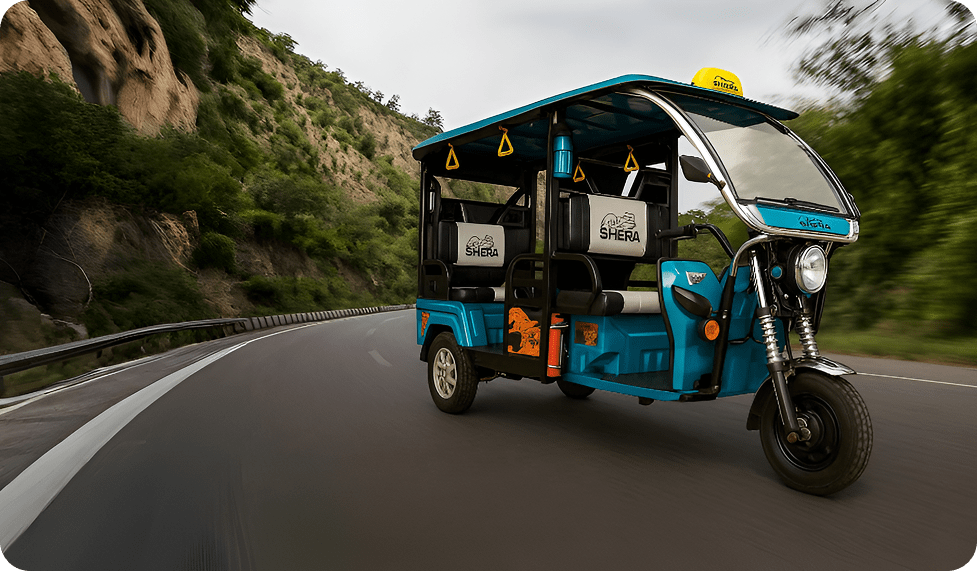
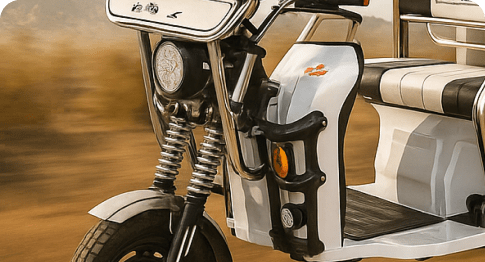
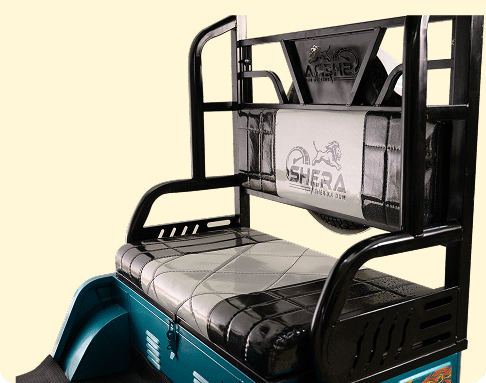
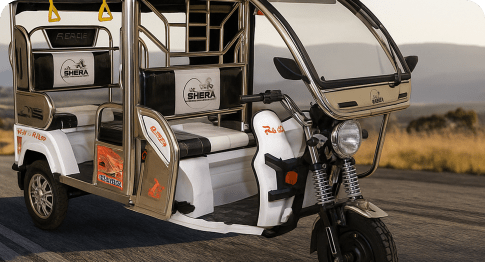
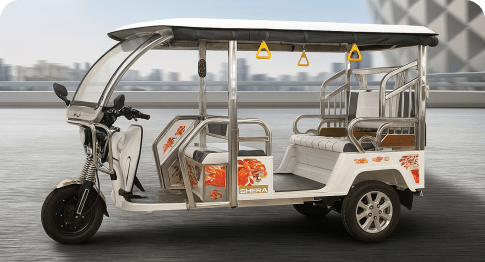
In commercial electric mobility, comfort is not a luxury—it is a performance driver. Shera E-Rickshaws are engineered to deliver superior ride comfort for both drivers and passengers, directly impacting productivity, safety, and customer satisfaction. Ergonomic Driver-Centric Design Shera E-Rickshaws feature thoughtfully designed seating, optimized handle positioning, and ample legroom, reducing driver fatigue during long operating hours and improving daily efficiency. Smooth & Stable Ride Quality Advanced suspension systems and balanced vehicle architecture ensure minimal vibration and enhanced stability, even on uneven urban roads—delivering a consistently smoother ride. Quiet Electric Operation Zero engine noise significantly improves in-cabin comfort, creating a calmer driving experience and a more pleasant ride for passengers. Optimized Cabin Space & Ventilation Spacious interiors, improved airflow, and intelligent layout design enhance passenger comfort, particularly in high-traffic urban conditions. The Sheraindia Advantage At Sheraindia EV Company, comfort is engineered—not added as an afterthought. Our E-Rickshaws are built to maximize driver well-being, passenger experience, and long-term operational value. ConclusionSuperior comfort translates into better performance, higher earnings, and stronger brand preference. Shera E-Rickshaws are designed to deliver on all three.

EV

How EVs Are Reducing Operating Costs for Fleet Owners

For fleet owners, profitability is defined by cost control and vehicle uptime. Electric Vehicles (EVs) are rapidly redefining fleet economics by delivering structurally lower operating costs compared to conventional vehicles. Lower Energy Costs Electricity costs significantly less than fossil fuels on a per-kilometer basis. EV fleets typically achieve 60–70% savings on energy expenses, enabling predictable and stable operating budgets. Reduced Maintenance Spend With fewer moving parts, EVs eliminate expenses related to engine oil, clutch systems, and exhaust components. This translates into lower maintenance costs, fewer breakdowns, and reduced downtime. Higher Fleet Utilization EVs spend more time on the road and less time in workshops. Improved reliability and faster diagnostics result in higher vehicle availability and better revenue realization per asset. Long-Term Cost Advantage Although EVs may carry a marginally higher upfront cost, the savings in fuel and maintenance enable faster payback. Over the vehicle lifecycle, EVs deliver a substantially lower total cost of ownership. The Sheraindia Perspective At Sheraindia EV Company, we engineer EV solutions that directly improve fleet economics—helping operators scale efficiently, protect margins, and future-proof their operations. ConclusionFor fleet owners, EV adoption is no longer a sustainability initiative. It is a financially disciplined, performance-driven strategy

EV

The Role of Charging Infrastructure in India’s EV Growth

The Role of Charging Infrastructure in India’s EV Growth Charging infrastructure is the critical backbone of India’s electric mobility ecosystem. Without reliable and accessible charging, EV adoption cannot scale—regardless of vehicle innovation. Enabling Mass Adoption The availability of charging stations directly influences consumer confidence and commercial viability. As charging access improves, EVs shift from early adoption to mainstream acceptance. Focus on Localized Charging India’s EV growth is being driven by home, workplace, and depot charging models, especially in Tier-2 and Tier-3 cities. These decentralized solutions are cost-effective, faster to deploy, and aligned with real-world usage patterns. Commercial Efficiency For fleets and last-mile operators, dedicated charging infrastructure reduces operating costs, improves vehicle uptime, and enables predictable, scalable operations—turning charging into a competitive advantage. The Sheraindia Advantage At Sheraindia EV Company, we recognize charging infrastructure as a growth catalyst, not a constraint. Our EV solutions are engineered to integrate seamlessly with India’s expanding charging ecosystem, empowering customers to transition with confidence.

EV

The Rise of Electric Mobility in Tier-2 and Tier-3 Cities

Electric mobility in India is no longer confined to metros. Tier-2 and Tier-3 cities are rapidly emerging as the next growth engine for EV adoption—driven by economics, necessity, and policy alignment. Why Smaller Cities Are Leading the Shift Rising fuel costs, shorter daily travel distances, and cost-sensitive commercial users make EVs a natural fit for non-metro markets. Electric three-wheelers and commercial EVs deliver significantly lower running costs, enabling faster income recovery for operators. Infrastructure Is No Longer a Barrier Contrary to perception, Tier-2 and Tier-3 cities benefit from simpler charging ecosystems. Home and depot charging meet most use cases, reducing dependence on public infrastructure and lowering operational friction. Strong Policy & Local Support State incentives, reduced registration costs, and local government support are accelerating adoption. EVs are also becoming a preferred solution for last-mile connectivity and urban mobility in growing cities. The Sheraindia Opportunity At Sheraindia EV Company, we see Tier-2 and Tier-3 cities as core markets, not secondary markets. Our EV solutions are engineered for durability, affordability, and real-world Indian conditions—empowering drivers and businesses to transition with confidence. ConclusionElectric mobility in smaller cities is not a future trend—it is a present reality. The momentum is clear, and the opportunity is substantial.

Sheraindia
EV

Electric Vehicles vs ICE Vehicles: Cost Comparison for Commercial Use

Electric Vehicles vs ICE Vehicles: Cost Comparison for Commercial Use For commercial operators, vehicle selection is no longer a technical decision—it is a profitability decision. When evaluated through the lens of total cost of ownership, Electric Vehicles (EVs) clearly outperform Internal Combustion Engine (ICE) vehicles. 1. Energy Cost Advantage ICE vehicles are exposed to volatile fuel prices, making operating costs unpredictable. EVs, on the other hand, run on electricity at a 60–70% lower cost per km, enabling stable and forecastable operating expenses—critical for commercial fleets. 2. Maintenance & Downtime ICE vehicles involve complex engines, frequent servicing, and higher breakdown risk. EVs have significantly fewer moving parts, resulting in lower maintenance costs, reduced downtime, and higher vehicle availability—directly improving revenue potential. 3. Total Cost of Ownership While EVs may have a slightly higher upfront cost, they recover this premium quickly through savings on fuel and maintenance. Over a 4–5 year commercial lifecycle, EVs deliver 20–40% lower total ownership costs compared to ICE vehicles. 4. Regulatory & Business Readiness With tightening emission norms and rising fuel taxes, ICE vehicles carry long-term regulatory risk. EVs align with government incentives, ESG goals, and future mobility policies—making them a future-proof commercial asset. The Sheraindia Perspective At Sheraindia EV Company, we believe electric mobility is not an alternative—it is the next operational standard for commercial transportation. EVs enable businesses to scale sustainably, reduce costs, and stay ahead of market and regulatory shifts. For commercial use, EVs are no longer a green choice—they are a smart business decision.